
Happy Passover
Remembering a personal Exodus this Holy Week

It is Holy Week in the Western Christian calendar. This week is the most significant of the year; it begins with the anticipation and energy of Palm Sunday, dives into the heaviness of Christ’s passion on Good Friday and ascends to the joy of the resurrection on Easter Sunday. Yet in the midst of these cosmic events is Holy Thursday, a time when Christ used the Passover, the historic feast of the Jewish people in the throes of the Exodus, to point to Himself as the true Passover lamb who takes away the sins of the world.
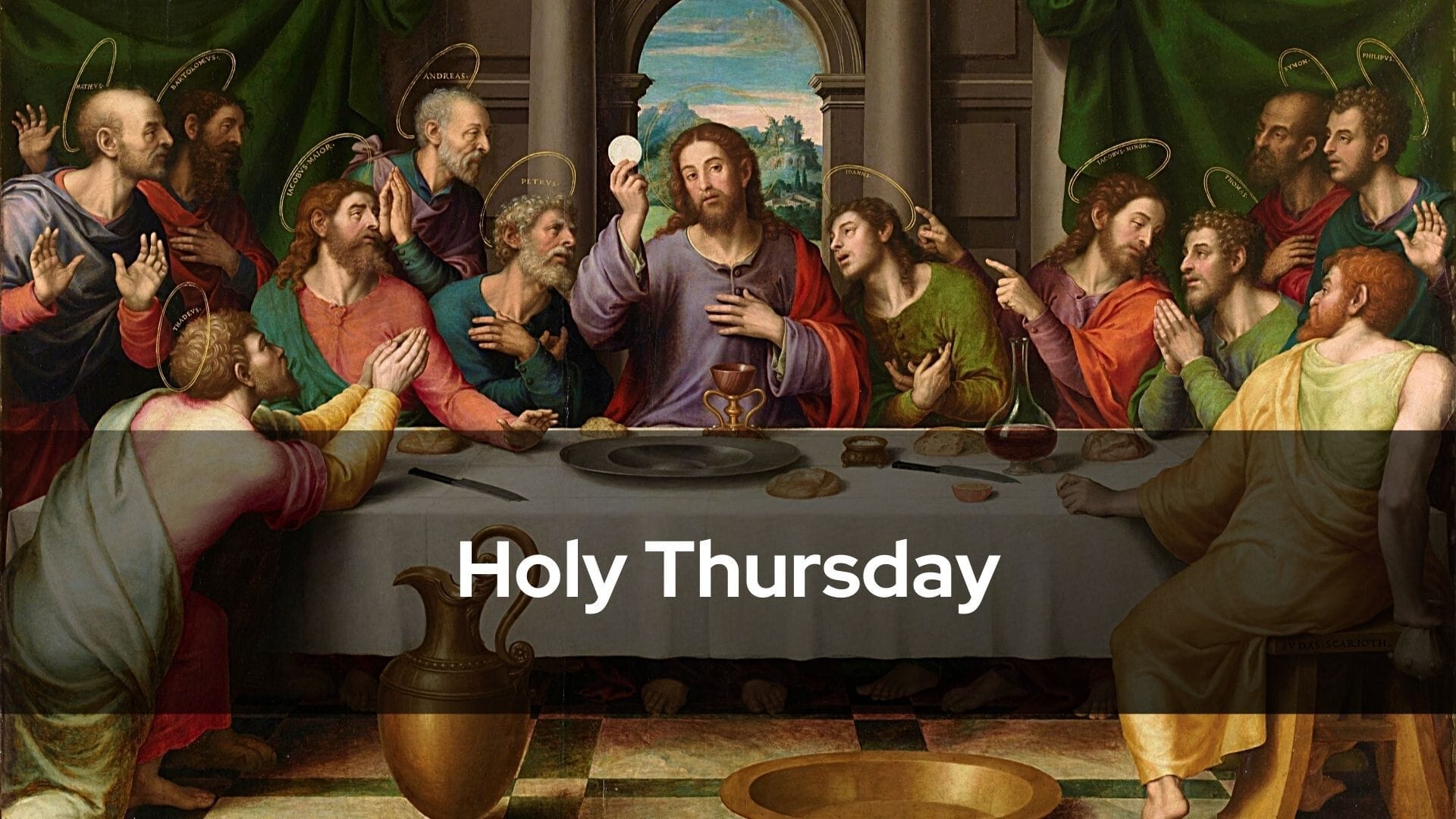
This year the dates of Holy week collide with the Jewish calendar’s celebration of Passover (beginning Wednesday 1st April), in honour of this I wanted to post a short reflection on my own personal Exodus.
Bondage
Exodus, the second book of the Bible, tells the story of the enslaved people of Israel being liberated from Egypt to become the covenant nation of Yahweh, the Most High God. The word exodus comes from the ancient Greek word exodos which literally means “a way out” or “departure”.
To be born in the late twentieth century (1991) was to be born into an era that was looking for a departure. Communism was rapidly dying with peaceful revolutions taking place across the East and the Soviet Union all but dissolved. Times of hope and prosperity were loudly proclaimed across Europe and as the second millennium drew closer the anticipation intensified. What would these new times bring?
The book of Exodus begins in the context of a new king arising in Egypt who did not know the greatness of Joseph and his God (Exodus 1:8). The king’s title was Pharaoh, which in Egyptian translates as ‘great house’ (Ignatius Catholic Study Bible, 2024). Instead of remembering the blessing that the Israelites had brought to the land, this Pharaoh saw them as a threat. So it was in the ‘new world’ that I grew up in; the Church and Christian faith had been something which had formed and blessed the land of Britain for centuries but was now seen as outdated by some and an oppressive threat by others. Its cultural relevance dwindled during my youth, with consumerism and individualism dominating the new era. Just as Pharaoh set taskmasters over the Israelites to burden them, so these new cultural gods demanded our attention and labour, offering modernity as an antidote to the old limitations of Christianity.
During my youth I was presented with the Christian faith by my father, who, having laboured in academia and the financial sectors of London and Manhattan, had turned his back on the new gods and returned to his home city of Liverpool, with a newfound hope in Christ that he was not afraid to share with others. He cut an odd figure; there were not many people who took their faith as seriously as he did and I often found him puzzling. He did help me to experience something of the worship of God in a Pentecostal Protestant context; its milk offered moral and spiritual formation, mainly through Bible study. I took great delight in reading about the brave masculine heroes like Samson, Joshua and Daniel who embodied the courage and leadership I desired to emulate. The cultural role models of my youth were very different — wealthy footballers, gangster rappers and famous celebrities whose exploits my father found uninteresting and often sinful.
I was between two worlds. My father presented life in an evangelical form; a life free from the empty pursuits of the world and alive in a personalised experience of God. The culture around me presented a life that was centred upon labouring in the mud of personal, earthly desires and offered the material bricks of hard labour with which all could build their own earthly kingdom. I saw no immediate gain in Christianity; its promises were fantastical and I desired the glories of earth rather than the seemingly abstract Kingdom of heaven. I chose to serve Pharaoh. I wanted my own great house.
I sought to establish myself as my own man through earthly means. I informed my father that I did not want to attend church on Sundays anymore; I wanted to play football. In Liverpool football is a sport which offers every young lad an opportunity to gain the respect of his peers and a shot at local deification; the best players were revered by all and held much sway in my local community of Toxteth which had produced great heroes such as Robbie Fowler (who was nicknamed ‘God’ by Liverpool fans). It was this God-like status which the sport offered which attracted me to it, yet after years of physical labour I found I was not tall enough or good enough to make it. I would need to find fresh bricks with which to build my earthly kingdom.
It was with this in mind that I stepped into the local street life of Toxteth. I had made friends through football with young men who were involved in organised crime; this crooked path offered me another opportunity for glory. My local community was saturated with people involved in street crime and families sustained by its profits. Just as Moses sought to assert himself over his quarrelling people in his own strength, I sought to gain the respect of my peers through these illicit means. I witnessed something of the darkness of the street and its lawlessness and was further burdened by the experience. Deliverance from this path came through my father, who warned me in no uncertain terms that if I continued this pursuit then I would have to leave the family home. It was with this warning that I fled from the prospect of a life of crime into the exile of the military.
Gershom
Moses describes the son he bore in exile as ‘Gershom’ (Exodus 2:22); this name meaning “I have been a sojourner in a foreign land”. Entering the military at a young age was a journey into a foreign land. I was a sixteen-year-old boy surrounded by men with whom, at first glance, I had little in common. They hailed from every village and city around Britain and the Commonwealth and brought with them strange accents and customs with which I was unfamiliar. To them, I was ‘scouse’; nothing else really mattered. I was stripped of any pride or achievement I had forged back in Toxteth; here they meant nothing.
This was a time which was punitive yet pedagogical. Punitive in that it demanded hard, physical labour and long hours of work as I transitioned from boy to soldier. Pedagogical in that it was a time away from my home city which taught me much about what King Solomon calls “vanity of vanities” (Ecclesiastes 1:2). It was during my years of service that I further sought to establish myself as a man through worldly means. I pursued personal status by completing the longest infantry course in the world and becoming a Royal Marines Commando, yet this brought me no lasting satisfaction. I pursued war, eager to gain glory through combat as many other men had before me. I pursued women, thinking they would satisfy something of the longings of my heart. Yet with every glory I pursued I was plagued with an ever-deepening loneliness and despair. These false gods offered me no respite. I was no longer in a foreign land; I was a foreigner to myself.
Exodus
“You have made us for yourself, and our heart is restless until it rests in you.” (Saint Augustine, Confessions). I left the military at the age of 23 and pursued education with the goal of becoming a teacher. It was during this time that my sins caught up with me. In the military I could escape to a country halfway around the world in times of struggle; back home in Liverpool I could no longer run away. I studied with a Christian from the Caribbean who heard me boasting in my sinful behaviour and rebuked me. He urged me to turn to God who would deliver me. This man was a Moses figure, calling me out of the bondage I had long become accustomed to. I recognised the restlessness of my heart and my need of salvation. I again attempted to run away from this calling: “give me chastity and continence, but not yet” (Saint Augustine, Confessions,). I tried to save myself through good works but consistently failed. My restless heart echoed the words of Saint Paul, “Wretched man that I am, who will deliver me from this body of death” (Romans 7:24).
“The sons of Israel groaned under their bondage, and cried out for help” (Exodus 2:23). It was in my groaning that I too cried out for help to God, with nowhere else to turn. “If you can save my life, then you can have it” were the words of my prayer; and just as the Lord heard their cries (Exodus 3:7), He heard mine. I was led back to the Christian community of my youth one Sunday morning and heard the Gospel of Jesus Christ. It was as if I had heard it for the first time; it smashed the foundations of my life. Here was a love that I had heard of but never grasped hold of; here was a God who was not just a distant, powerful creator but a loving Father to His people, the Passover lamb who gave himself for us. Glory belongs to Him alone. I could not give him my life; it was His divine love which gave my life to me. “Late have I loved you, Beauty so ancient and so new, late have I loved you! You called, you cried out, you shattered my deafness... You touched me, and I burned for your peace.” proclaimed Saint Augustine, I burned for His peace and have done since that day. His law has given me wisdom; His grace and truth have given me life in all its fullness (John 10:10).
It is with great joy that I can now sing to the Lord with Moses, “The Lord is my strength and my song, and he has become my salvation; this is my God, and I will praise him, my father’s God, and I will exalt him” (Exodus 15:2). He has come to my aid and delivered me from slavery to sin and self. He has guided me to safety, nourishes me with the heavenly food and drink of the Eucharist and guides my soul by His Holy Spirit. He has revealed Himself by His grace and although we are, as Saint Peter writes, sojourners and exiles in this world (1 Peter 2:11), I know that the Lord Jesus Christ, the good shepherd and true Passover, will lead us home.